
Understanding Dog Coat Types: A Complete Guide
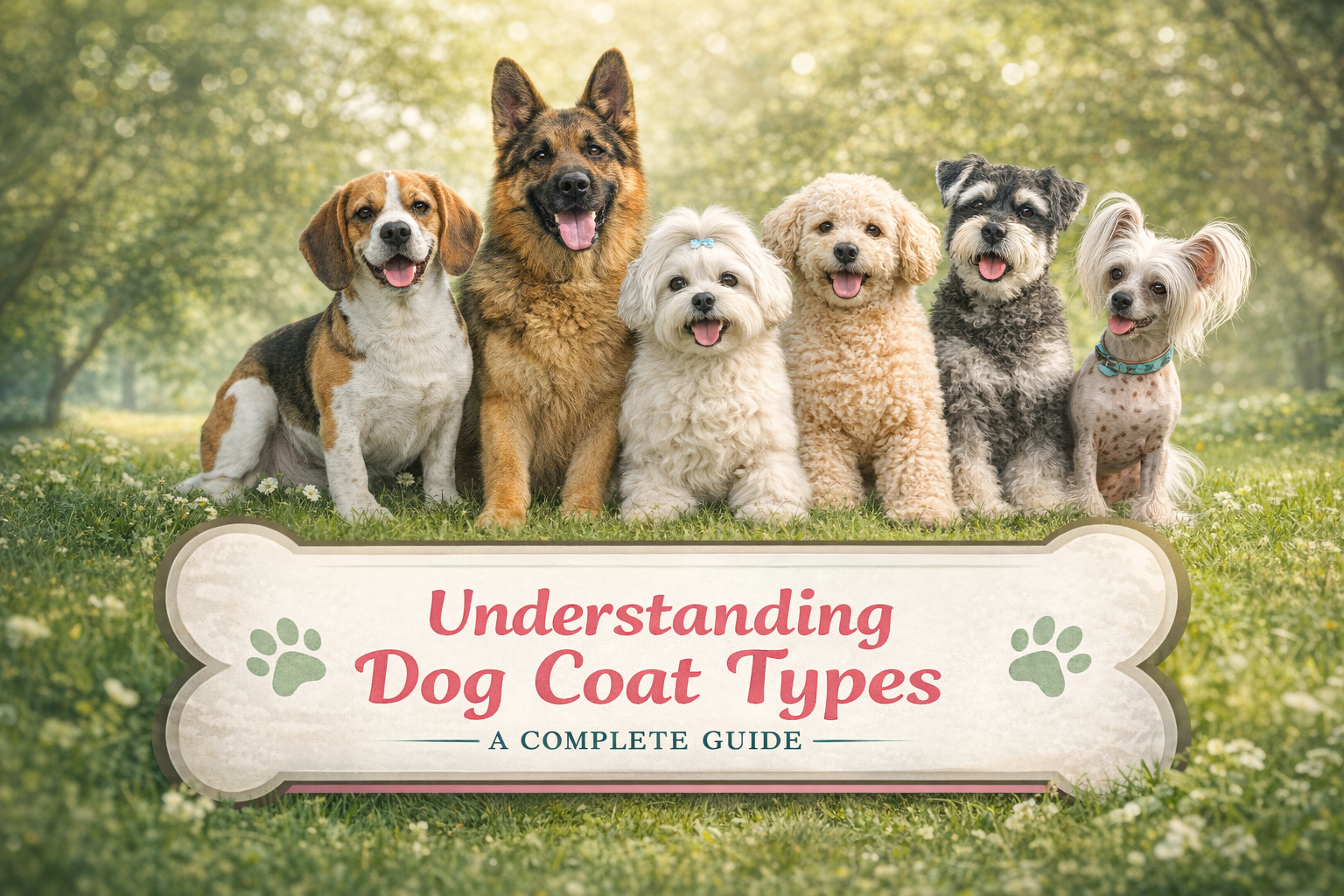
Understanding Dog Coat Types: A Complete Guide
Not all dog coats are created equal — and grooming the wrong way can cause matting, skin irritation, excessive shedding, and long-term coat damage. Understanding your dog's coat type is the key to proper grooming, healthier skin, and a happier dog.
This guide explains the six main dog coat types, how to identify your dog's coat, and exactly how to care for it.
The Six Main Dog Coat Types
1. Smooth / Short Coat
Examples: Beagle, Boxer, Dalmatian, Doberman
Characteristics:
- Short, glossy hair
- Lies flat against the body
- Sheds year-round
Grooming Needs:
- Weekly brushing with rubber curry brush
- Bath every 8–12 weeks
- Minimal trimming
2. Double Coat
Examples: German Shepherd, Husky, Golden Retriever, Corgi
Characteristics:
- Soft undercoat and coarse outer coat
- Heavy seasonal shedding
- Weather-resistant
Grooming Needs:
- Daily brushing during shedding season
- Regular deshedding treatments
- Never shave
- Bath every 6–8 weeks
3. Wire / Broken Coat
Examples: Schnauzer, Wire Fox Terrier, Airedale
Characteristics:
- Coarse, dense texture
- Low shedding
- Natural protection
Grooming Needs:
- Hand-stripping for show dogs
- Clipping for pet trims
- Brush 2–3 times weekly
- Groom every 6–8 weeks
4. Long / Silky Coat
Examples: Yorkshire Terrier, Maltese, Afghan Hound
Characteristics:
- Long, flowing hair
- Prone to tangling
- High maintenance
Grooming Needs:
- Daily brushing
- Professional grooming every 4–6 weeks
- Regular conditioning
- Keep hair clipped for easier maintenance
5. Curly / Non-Shedding Coat
Examples: Poodle, Bichon Frise, Portuguese Water Dog
Characteristics:
- Continuously growing hair
- Hypoallergenic
- Mats easily
Grooming Needs:
- Professional grooming every 4–6 weeks
- Daily to every-other-day brushing
- Regular face and hygiene trims
- Prevent matting with proper products
6. Hairless
Examples: Chinese Crested, Xoloitzcuintli
Characteristics:
- Little to no body hair
- Exposed skin
Grooming Needs:
- Weekly bathing
- Skin moisturising
- Sun protection
- Regular nail care
How to Identify Your Dog's Coat Type
Look at:
- Texture — coarse, soft, wiry
- Length — short, medium, long
- Shedding — heavy, light, none
- Layers — single or double coat
Common Grooming Mistakes by Coat Type
Double Coats
- Do not shave
- Use proper deshedding tools
Curly Coats
- Do not leave too long between grooms
- Maintain a regular 4–6 week grooming schedule
Wire Coats
- Do not overuse slicker brushes
- Consider hand-stripping to maintain texture
Long Coats
- Do not bathe without brushing first
- Remove all tangles before bathing
Recommended Tools by Coat Type
Smooth Coats
- Rubber curry brush
- Chamois cloth
- Moisturising shampoo
Double Coats
- Undercoat rake
- Slicker brush
- Deshedding shampoo
Wire Coats
- Stripping knife (professional use)
- Pin brush
- Texturising shampoo
Curly Coats
- Slicker brush
- Metal comb
- Moisturising conditioner
- Detangling spray
Final Thoughts
Understanding your dog's coat type allows you to choose the correct grooming routine, tools, and products. Regular grooming improves coat health, prevents skin issues, and keeps your dog comfortable.
Not sure what your dog's coat type is? Bring them to Pawlished Pets for a consultation. I will identify their coat type and create a personalised grooming plan to suit their needs.